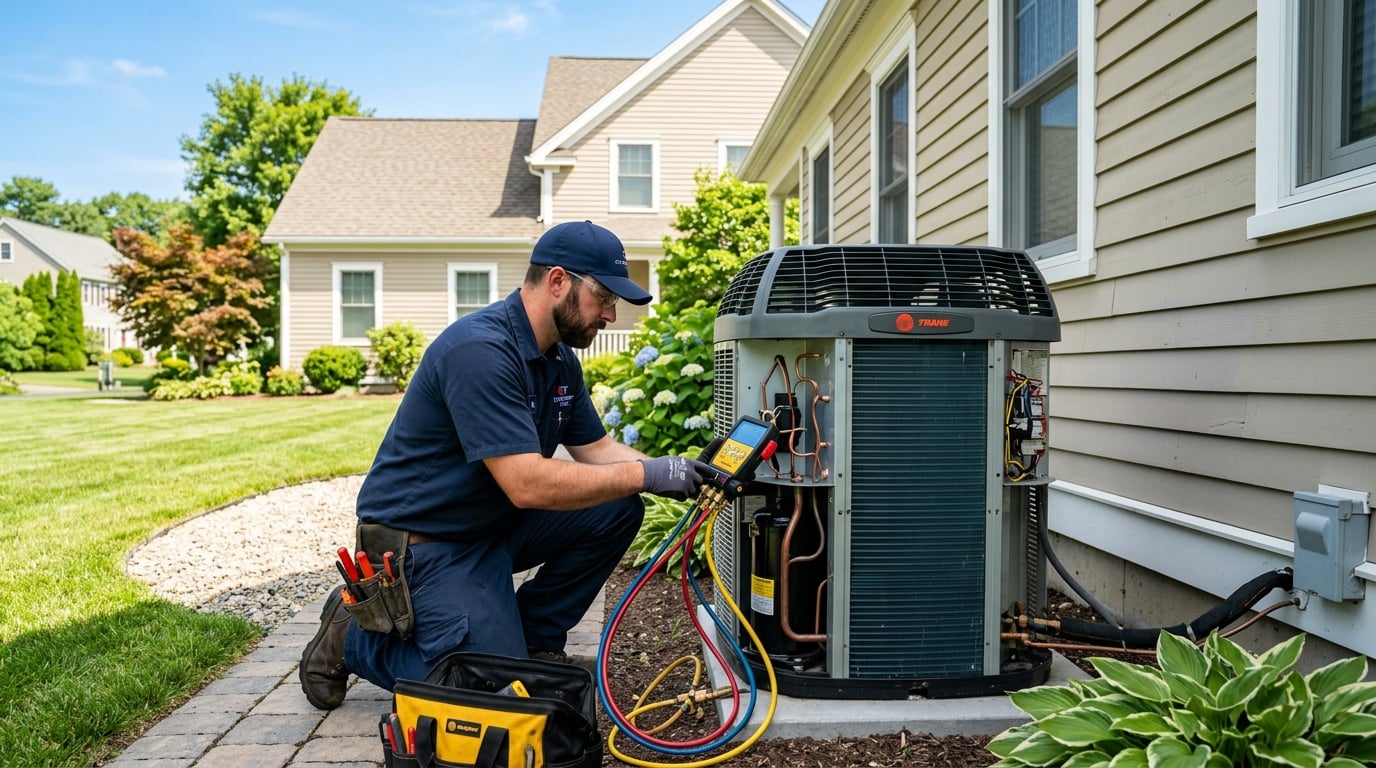
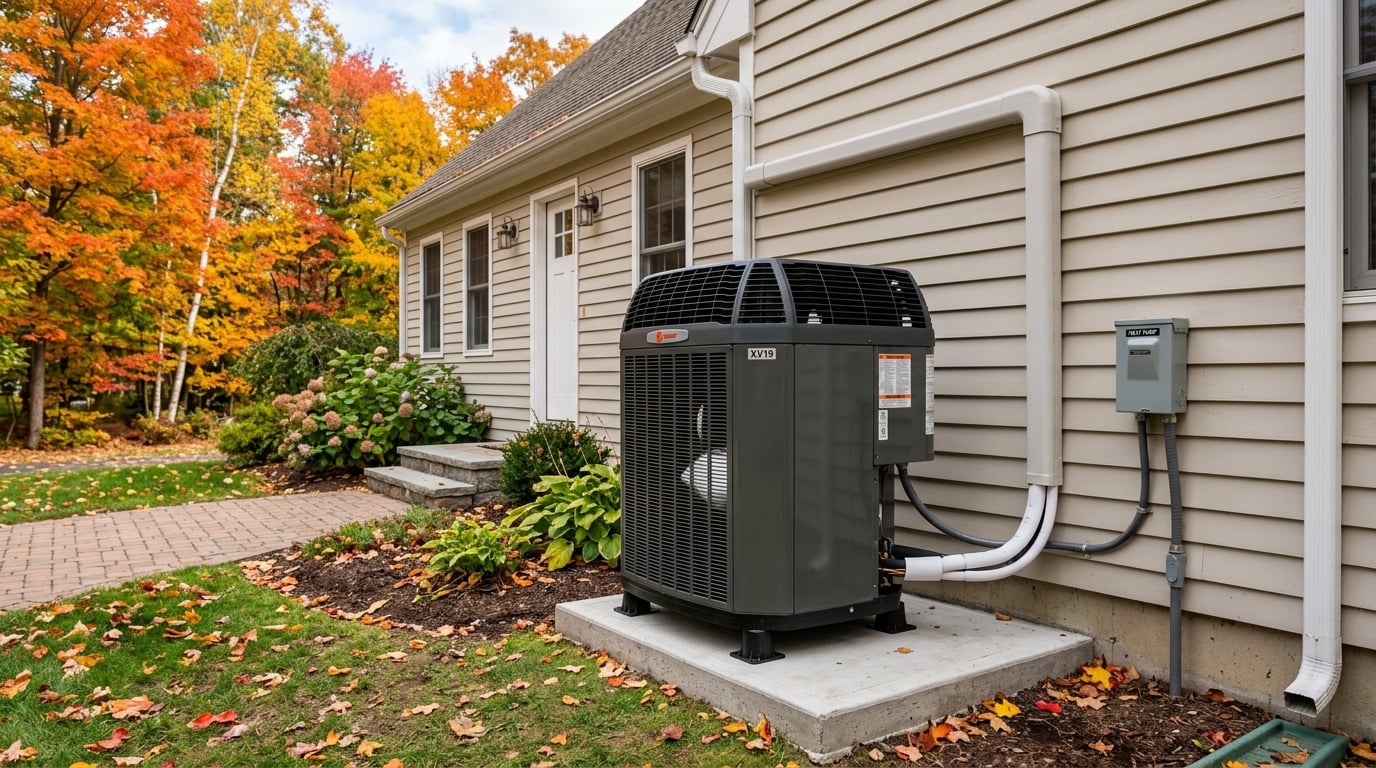
Ten years ago, the conventional wisdom in New England was that heat pumps could not handle our winters. That advice is now badly out of date. Modern cold-climate heat pumps maintain full heating capacity well below freezing and continue operating efficiently at temperatures of -5°F to -15°F — colder than almost any night Shelton or Monroe will ever see.
Combine that with Connecticut’s high electricity-vs-oil price dynamics, generous state rebates, and federal tax credits, and heat pumps have become one of the most-asked-about upgrades among our customers. Here is an honest look at whether one makes sense for your home.
Do Heat Pumps Actually Work in Connecticut Winters?
Yes — with the right equipment. The key phrase is "cold-climate heat pump." Standard heat pumps lose efficiency as outdoor temperatures drop, but cold-climate models from manufacturers like Mitsubishi, Carrier, and Lennox use variable-speed inverter compressors that keep producing reliable heat through a typical CT cold snap.
For context, average January lows in the Shelton/Bridgeport area sit around 20°F, and even our harshest arctic blasts rarely push below -5°F. Modern cold-climate units are rated to deliver 80–100% of their heating capacity at 5°F — meaning for the overwhelming majority of the Connecticut heating season, a properly sized heat pump carries the whole load.
What Heat Pumps Cost — and Save — in Connecticut
In the greater Shelton area, a single-zone ductless mini-split typically runs $4,000–$7,500 installed, while a whole-home ducted or multi-zone system generally falls between $12,000–$25,000+ before incentives, depending on home size and complexity.
The savings story depends on what you are replacing. Homeowners switching from oil heat or electric baseboard tend to see the biggest reductions — often 30–50% off annual heating costs. Those switching from natural gas see more modest savings, but gain high-efficiency central air conditioning in the same package, which matters more every year as Connecticut summers grow hotter and more humid.
Connecticut Rebates & Federal Tax Credits
- Energize CT rebates: Connecticut’s utility-sponsored program offers substantial rebates on qualifying cold-climate heat pumps — often hundreds to thousands of dollars depending on equipment tier and whether you are displacing oil, propane, or electric resistance heat.
- Federal tax credit (25C): Qualifying heat pumps are eligible for a federal tax credit of up to 30% of project cost (capped at $2,000) under the Energy Efficient Home Improvement Credit.
- Financing: Low-interest financing options are frequently available for energy-efficiency upgrades through Connecticut programs, helping spread project costs over time.
Incentive programs change year to year, and equipment must usually meet specific efficiency tiers to qualify. When we quote a heat pump project, we identify every rebate your equipment qualifies for and handle the paperwork — so you never leave money on the table.
Is a Heat Pump Right for Your Home?
Heat pumps are an outstanding fit if you currently heat with oil, propane, or electric baseboard; if your AC and furnace are both nearing the end of their lives; if you are adding comfort to a finished attic, addition, or bonus room; or if you want to shrink your carbon footprint without sacrificing comfort.
They are a more nuanced decision if you have inexpensive natural gas and a newer furnace — in that case, a dual-fuel system or simply a high-efficiency AC replacement may serve you better. An honest load calculation of your specific home is the only real way to know.
Curious What a Heat Pump Would Cost for Your Home?
Get a free online estimate in about two minutes. We will size the system to your home, apply every rebate you qualify for, and give you an honest recommendation — even if that recommendation is to keep what you have.
Frequently Asked Questions
Will a heat pump keep my house warm at 0°F in Connecticut?
A properly sized cold-climate heat pump will, yes. Modern cold-climate models are rated to deliver most of their heating capacity at 5°F and continue operating below -10°F. Many CT homeowners also keep a backup heat source for extreme cold snaps.
Are heat pumps cheaper to run than oil heat in CT?
In most cases, significantly. Oil is one of the most expensive ways to heat a Connecticut home, and homeowners switching from oil to a cold-climate heat pump commonly cut heating costs by 30–50%.
How long does a heat pump last in Connecticut?
Typically 12–15 years for the outdoor unit, similar to a central AC system. Annual maintenance — especially keeping coils clean of leaves and coastal salt residue — extends lifespan considerably.