Connecticut summers used to be a few hot weeks in July. Not anymore. The Bridgeport–Shelton corridor now regularly sees extended stretches above 90°F with dew points that make it feel tropical — and air conditioning has gone from luxury to necessity for sleeping, working from home, and protecting older family members.
The catch: the hottest week of the year is also when neglected AC systems fail. A spring tune-up is the cheapest insurance you can buy against a sweltering, expensive emergency. Here is what to do — and what to leave to a pro.
Why AC Maintenance Matters More in Connecticut Than You Think
- Humidity load: CT air conditioners do double duty — cooling AND dehumidifying. A system low on refrigerant or with a dirty coil cools poorly and leaves your home clammy.
- Pollen seasons: Connecticut’s heavy spring tree pollen (you have seen the yellow film on your car) clogs outdoor condenser coils and chokes airflow.
- Coastal air: Homes near the Sound in Milford and Stratford deal with salt-accelerated corrosion of outdoor coils and electrical connections.
- Shorter run season: CT systems sit idle 7–8 months a year. Seals dry out, capacitors weaken, and critters nest in outdoor units over winter — problems you only discover on the first hot day.
The Homeowner DIY Checklist (Do This Every Spring)
- 1Replace the air filter, and set a reminder to check it monthly all summer.
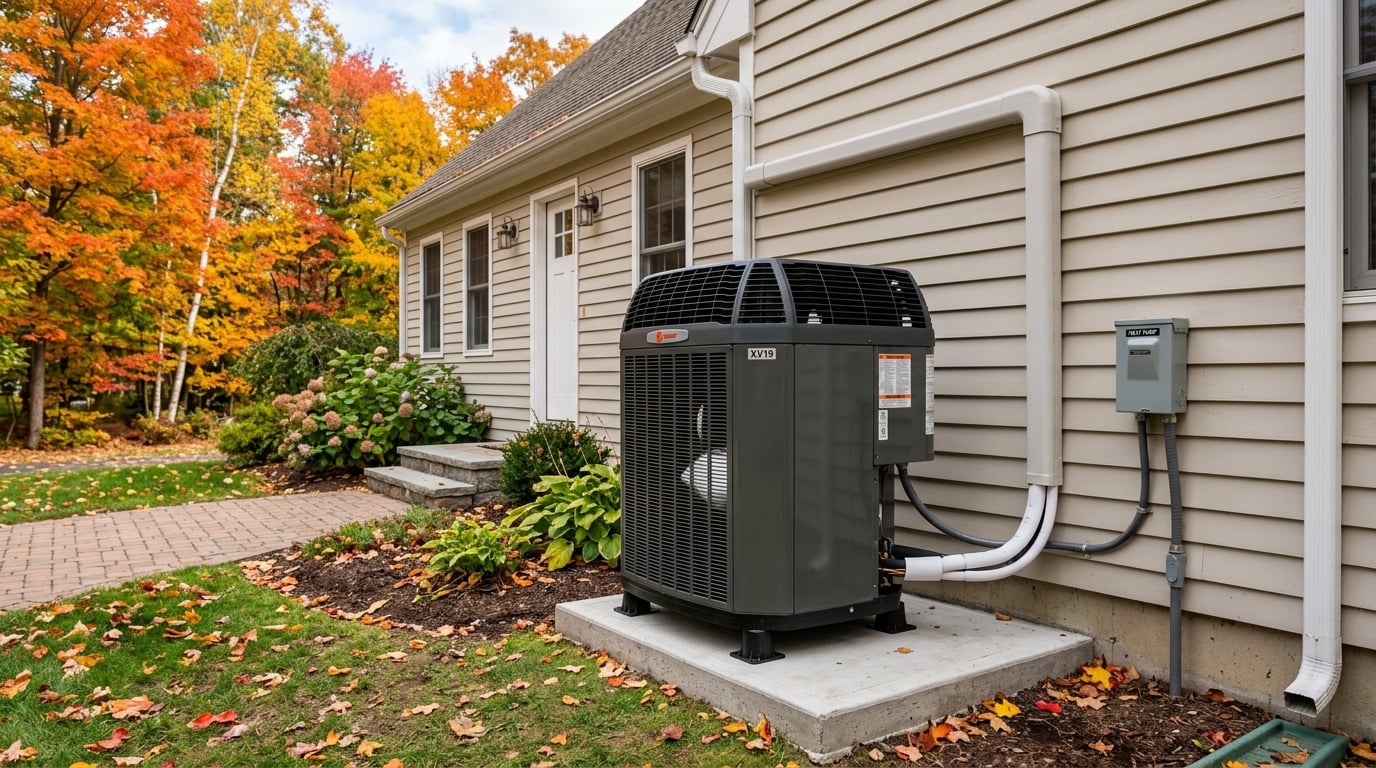
- 2Clear two feet of space around your outdoor condenser — trim shrubs, rake out leaves, and remove anything stored against it.
- 3Gently rinse the outdoor coil with a garden hose (power off first, never use a pressure washer).
- 4Check that the condensate drain line drips when the AC runs — a clogged drain line is a top cause of summer water damage and shutdowns.
- 5Open and vacuum your supply registers; make sure furniture and curtains are not blocking them.
- 6Test the system on a mild day. Let it run 20–30 minutes and confirm strong, cold airflow from every vent.
- 7Check your thermostat batteries and program a sensible schedule — every degree below 75°F adds roughly 3–5% to cooling costs.
What a Professional AC Tune-Up Includes
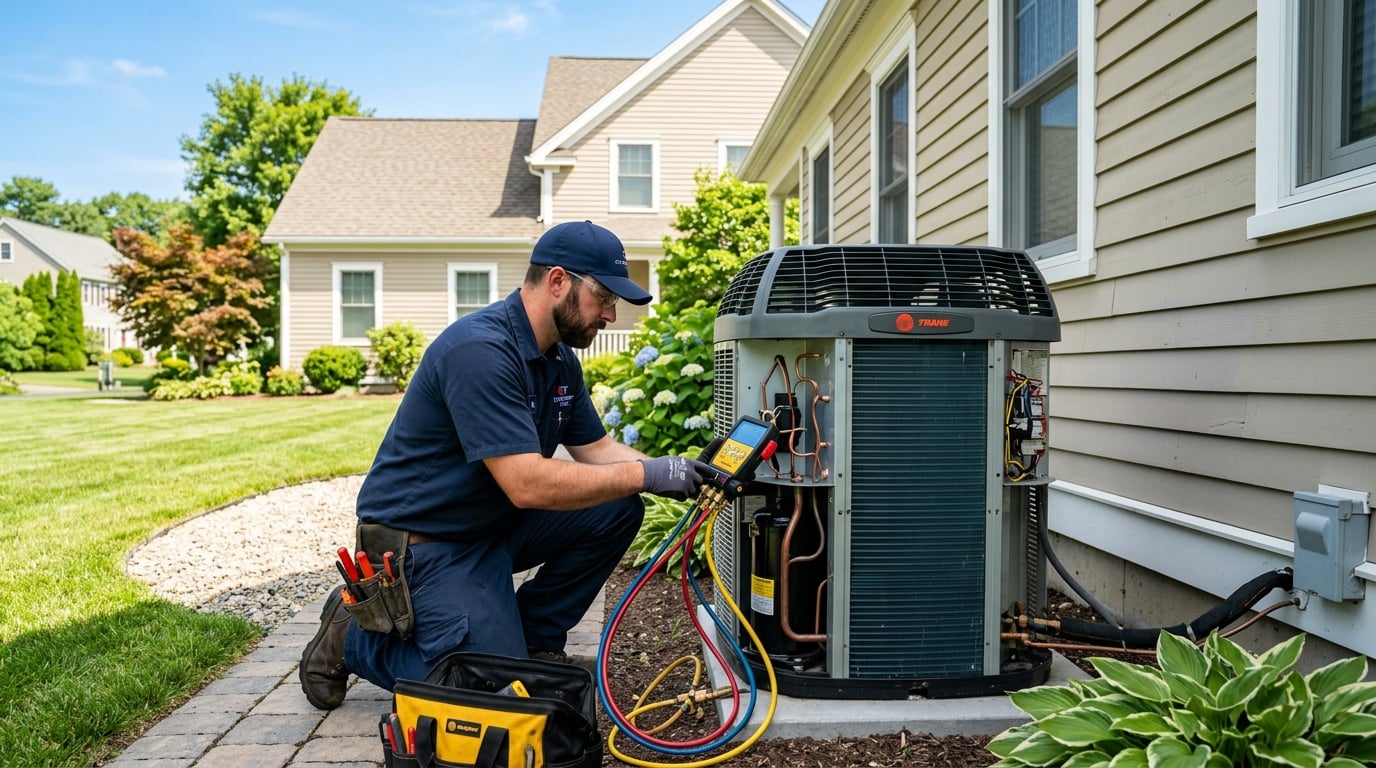
- Refrigerant pressure check and leak inspection
- Electrical testing of capacitors, contactors, and connections — the most common summer failure points
- Condenser and evaporator coil inspection and deep cleaning
- Blower motor amperage draw and belt/bearing inspection
- Condensate drain flush and pan treatment
- Thermostat calibration and temperature-split measurement
- Safety control verification and overall efficiency report
A weak capacitor caught in May is a $200 fix on your schedule. The same capacitor failing on a 95°F Friday in July is a no-cool emergency, a hot night, and premium pricing across the industry. That is the entire argument for maintenance in one sentence.
What AC Service Costs in Connecticut
In the Shelton/Milford/Monroe area, professional AC tune-ups typically run $100–$250. Common repairs — capacitors, contactors, fan motors, refrigerant top-offs — generally land between $150–$800. Full central AC replacement in Connecticut typically ranges from $6,000–$15,000 installed depending on tonnage, efficiency rating, and ductwork. If your system is 12+ years old and uses phased-out R-22 refrigerant, replacement is almost always smarter than repair.
Beat the Heat — and the Rush
Get upfront pricing on an AC tune-up, repair, or replacement with our free online estimate tool. Two minutes, no obligation, no phone tag.
Frequently Asked Questions
When should I schedule an AC tune-up in Connecticut?
April or May is ideal — after pollen season starts winding down but before the first heat wave fills service schedules. Tune-up availability in July is far tighter and emergency calls take priority.
How long does central AC last in Connecticut?
Typically 12–17 years. Annual maintenance, keeping coils clean, and proper sizing at installation are the biggest factors in reaching the high end of that range.
Why is my AC running but the house still feels humid?
Common causes include an oversized system that short-cycles, low refrigerant, a dirty evaporator coil, or a fan speed set too high. All are diagnosable in a standard service visit.